China
Beijing
, 3 days, 3 min read
Beijing has about 3,000 years of history behind it, and you can still read much of it in the street grid. What surprised me more was how quiet the modern city is.
How the old capital was laid out
The city was already a major center under the Zhou Dynasty. Kublai Khan made it the capital of the Yuan Dynasty in the 13th century.
The layout you see today mostly dates from the early 15th century, when the Ming Emperor Yongle moved the capital here and built the city walls. He set the main palaces on a strict north-south axis meant to represent cosmic order. For more than 500 years, through the Ming and Qing dynasties, this was where China's emperors lived and ruled.
Quiet streets
For a city of over 21 million people, Beijing is very quiet. Most of the traffic noise is a low electric hum: the local cars are largely electric, and so are the public buses. There are electric share bikes parked at nearly every intersection, and locals and tourists ride them all over the city.
The Forbidden City
The Forbidden City sits at the center of Beijing and now houses the Palace Museum. Inside the gates it's crimson walls and golden roofs, with huge stone courtyards where 24 emperors held court.
Most of the details were meant to show the emperor's authority, down to the number of mythical beasts lined up on each roof ridge and the carved marble ramps between the stairs.
Temple of Heaven
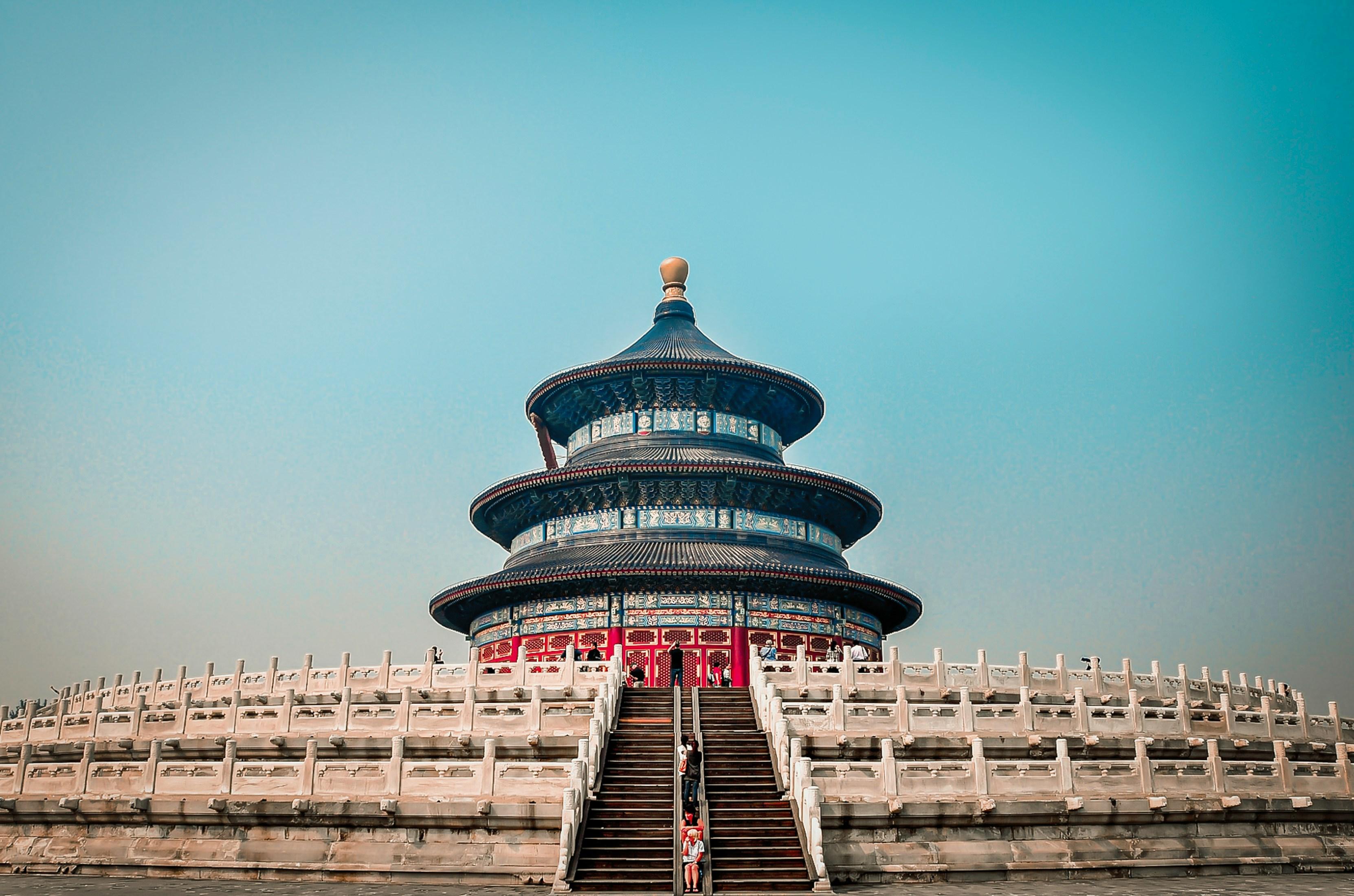
The Temple of Heaven is a short distance away. Ming and Qing emperors came to this complex every year to pray for a good harvest.
The Forbidden City was built for ruling, and this place was built for ritual. Its centerpiece, the Hall of Prayer for Good Harvests, is a round wooden hall put together without a single nail. On a clear day the blue-tiled roof is striking against the sky.
Old Beijing hotpot at Nanmen Shuanrou
After all that walking we went to Nanmen Shuanrou (南门涮肉) for Old Beijing-style hotpot.
Hotpot in southern China is usually heavy and spicy. The Beijing version is a plain, clear broth in a copper pot heated with charcoal, so the meat has to be good. You swish thin slices of mutton and beef in the boiling broth for a few seconds and dip them in sesame paste. We had greens, mushrooms and crispy sesame buns on the side. It's a meal for a group.
The Great Wall at Mutianyu
For the Great Wall we went to the Mutianyu section, about 70 kilometers northeast of the city. It's well restored, it gets smaller crowds than the more famous sections, and it runs through thick green forest.
From up on the wall you can watch it run along the steep ridges, watchtower after watchtower, well past where you can see. Building it on those slopes must have been brutal work.
Overall
Three days was enough for the palaces, the wall and a very good hotpot dinner. What stayed with me most was the city itself: an imperial street plan that still holds, with almost silent electric traffic running through it.